
five more voices
generations of West Virginia creative writing
~ five writers, each issue ~
A sister site to Voices of West Virginia : Issue # 4
FREE!
You're invited
to feel proud!
FAQ
questions,
click the About
tab
Natalie Sypolt


Living / Writing Appalachia
Sometimes at night, at her mountain home in Preston County, Natalie Sypolt hears a lion roar. A real lion. She just rolls over and goes back to sleep. “When friends stay over, I tell them, ‘Listen, in the night, you’re going to hear some things that might sound like a lion,'” she said. “Don’t be afraid. It is a lion, but it’s in a cage.’”
A guy started a little zoo down the road in the 1990s. He has a lion, a tiger, a jaguar, goats, giraffes and other animals now.
The roars still drift through the woods, sounding closer than they are.
Natalie’s haunting, insightful stories are like that. They often
go along quietly, till something unlikely - boiling below the surface – explodes, changing the meaning or the dynamics, taking the reader to another level. Admirers compare her to Flannery O’Connor.


Natalie feeding her kitties.
Natalie and her mom
She grew up in the big mountains surrounding Kingwood. “I live in my grandparents’ frame house now. My dad lives right beside me in the mobile home where I grew up.” Natalie is tired of people equating trailers with bad character. “I know lots of good people who live in mobile homes,” she said.
Her house and the mobile home are part of a family compound.
“A little bit down the road from my dad is my mother’s brother.
And then a little bit down the road from him is my mom’s other brother. And various cousins have lived here. They move away
and come back and move away. It’s not a ton of property, but we can all live here and everybody’s not in everybody’s faces.”
“I think it’s very Appalachian. Some of it is that we wanted to be together, and the other is just necessity. Like not wanting to be in Virginia anymore and where are you going to move back to?
You’re going to move back to where you can put a place. The land was here.”
Her great-grandfather bought that land in the mid-1900s. Then her grandfather built the frame house where she lives. He built it from scrap lumber, from a house that was being torn down. Working in the Pittsburgh steel mills, he drove back and forth, building his house on weekends.
“He always wanted to be here,” Natalie said. “It was a matter of where he wanted to be and where he could be.”
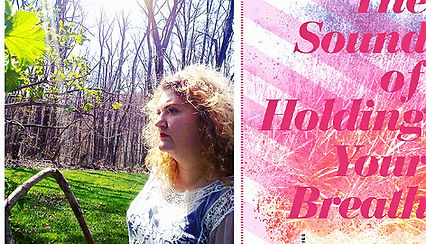
Her writing
Natalie is on the verge of busting out (or edging) into national writing acclaim. Her second book, If Only the Rain Would Come, a novel-in-stories, is set in the rural area around a West Virginia small town. Her first book, The Sound of Holding Your Breath, set in the same fictional West Virginia town, attracted comments about her gorgeous, down-to-earth writing and plot twists.
Here’s a sample of that writing from “Flaming Jesus,” a story in The Sound of Holding Your Breath.
“This is a place where no one cares if you live in a trailer. No one even thinks twice about it. Often, the 'mobile homes,' that are really only mobile once in their lives, are nicer and safer than the little wooden houses, drafty and cold. All homes, trailers and wooden houses, are fire traps…
Their church is up the road from their place. “The roadsides are thickly wooded, branches nearly scraping my car on both sides. The very sunlight has a hard time coming through. Only the roadway is light, golden. I feel a pull as the land inclines. I know soon the hill will top out, the woods will break, and there will be a structure. I hold my breath as the way gets brighter, watch as, seemingly out of nowhere, the simple white church appears. There is one stained-glass window of the resurrected Messiah in the attic and only a plain sign outside that reads 'Warm Church All Welcome.'"
The 15-year-old narrator is mesmerized by Josiah Mayhew, the preacher’s son. “He was two years older, more sinner than saint. He scared me. Fear was a dangerous thing to mix with love. He’d sit in a front pew on Sunday, looking gloomy and wearing all black. Sometimes he’d pretend to sleep, sometimes draw in his Bible, anything to ignore his father as he pounded the pulpit with his left hand and held his right claw-like fist close to his side, slightly tucked under his robes.
“I never knew what happened to his arm, but I did know this was the one that scared Josiah, deep down where he wouldn’t admit. Though the fingers didn’t work, the reverend would use his arm like a club, blasting the wickedness out of his deviant son…”
Before the story is over, teenagers are climbing out of windows and tiny figures of Jesus are being set on fire in the church attic, among other things. Ordinary people with deep secrets.
A small college in Pennsylvania required all their students to read The Sound of Holding Your Breath after it came out. “I went up there to talk with them twice,” Natalie said. “That was a great experience for me, an important experience. Because these students had really studied my book. And many said something to me like 'It was so important to me to see people like me in a book.' Or 'I had a cousin who did XYZ.' Or 'This reminds me of my dad who went to jail.' Or whatever.
"That was validating. I would have loved it when I was young, if somebody had handed me a book about people I could recognize from my own life, a book that says, 'These lives are important enough and worthy enough to be written about.'”
In her second book, If Only The Rain Would Come, newly published by University of Kentucky Press, each story builds on the last. And she recently finished a draft of a novel. She’s on a roll.


A storyteller’s beginning
Natalie’s grandma and grandpa were her first and best storytellers. She called them Pappy and Ma. “I wanted to be with them as much as possible. Before I started school and when I was in kindergarten, my mom and dad would go to work, and I’d just walk up the hill to their house, where I live now. I was always more comfortable around older people than people my own age, maybe because I’d been with them so much.”
She loved stories. Her mom read out loud to her till she was maybe nine. She was always reading on her own. “And I loved for my grandmother and grandfather to take me for a ride and tell me stories." As they passed houses, sometimes they told her what happened in there before she was born. Or they’d just come up with something that happened who knows where. “When I got older, I realized, they never really told me nice stories. 'Here’s a story about how this person died. Or here’s a story of this tragedy. Or here’s a story about how this person ended up running from the police and holding people hostage in the attic of this house.'
“That’s Appalachian dark humor, I think, because when they would tell me those stories, it was never like ‘Oh, now we’re going to tell you this cautionary tale!’ It was ‘Here’s this interesting story’ and I always heard it that way. I never heard it as a terrible tale. But now that I think back, I think ‘I was ten years old! Why are they telling about the house fire that killed a baby?"
She laughed. “Actually, I wish that I had them tell me more, because they would tell me anything I asked. Or if I had just written stuff down. I’m lucky that I have some recordings of him, especially. There’s nobody left to ask.”


Natalie, Pap and cousin Derek
Her second book
Her new novel-in-stories, If Only the Rain Would Come, centers around the Crystal family, who live in a family compound, outside the little community of Warm. People say “Don’t go down there, Don’t mess with the Crystals.” Kind-hearted Sam Crystal is an exception to the family image.
The book’s central character, a teacher named Hazel, fell in love with Sam when they were in high school. In the story, “Careful Negotiations,” Hazel has run into Sam at the diner. “When Sam says to her that he doesn’t cheat on his wife, she nods. The next time she sees him, he’ll say it again, and she’ll nod again, but he won’t sound as sure. And then one day when she’s sitting on her front porch, his truck drives past. On the way back, he stops in front of her gate. He sits there for five minutes before getting out and lets the gate swing open."
In another story, “The Good One,” Andy Crystal, kind-hearted teenage son of Sam’s dark twin, Walker, is caring for his dad as he dies.
“… my daddy is a twin, and sometimes I wonder if somebody told him and my uncle Sam when they were little which was going to be the good one and which was going to be the bad. Maybe when they were babies, even, and nobody thought they could hear, but they could, so when they grew big, Uncle Sam went to the army, and Daddy went out drinking.
Course, we’re all Crystals, so no one much expected us to be anything anyhow.”
An uplifting final story casts redemption, resilience and hope back over the whole book. “I really wanted the book to end with hope,” Natalie said. “Maybe it will go that way for the characters. Maybe not. But there’s hope.”
When she was trying to place the book with a publisher, “my agent, who is in New York, sent it out to all the fancy presses, the New York houses where I would love to get a book published. And I got amazing, kind rejections from some very recognizable places. They were all like, “We love this. The writing’s great. We love these characters! But these are short stories, and we can’t sell them.”
So, as her second novel-in-stories reaches readers, she has already written the first draft of a one-story novel. “It’s set in West Virginia. There’s mystery and danger, but also a lot about music and family,” she said. Beyond that, she didn’t want to talk about it. "I don't want to jinx it!"
Love of writing
Writing brings her back to herself, she said. It’s worth it on its own, no matter what level of recognition you get. “I feel like I’m my truest self when I can read something I wrote. Not necessarily when I’m writing it. But when I read it back, when I can see, Oh, I wrote those words, and I don’t even know where they came from. They just appeared on the page. They came from a different part of my brain.”
She recently taught a graduate creative writing class for West Virginia University while she was going through the process of getting her book ready for publication. She loved that. “I got to share all that with them, so they could see what that process was like. I was a writer and a writing teacher at the same time. I thought that was a unique experience for them and for me.”
Natalie and a friend have created a writers' retreat for women called Fern and Ink, in a beautiful park near Wheeling. They plan to host weekend retreats several times a year, for themselves and others. The website says, "Our goal is to facilitate a relaxing and meaningful space to write or read or simply take a break from the every day."
Space and time to write is a real priority for a writer, Natalie said, "Though I live out in the country, there are still lots of distractions," she said.

Upcoming retreats
April 10-12, 2026
October 9-11, 2026
Sandscrest Retreat & Conference Center
Wheeling, WV
Will she keep living on her family compound? “If you'd asked me ten years ago, I would have said yes," she said. "But now I have my fellow, and he lives outside Pittsburgh. He has two kids and lives about five minutes from them. So we’ll see.”
Wherever she is, we can look forward to her upcoming novel and subsequent works

Fayette County native Kate Long edits Five More Voices and
wrote this story.
A glimpse of her new book
"unflinchingly honest and deeply human..."
Background for this story: Hazel, a schoolteacher and the book's central character, fell in love in high school with Sam Crystal, an identical twin, though they never dated. Sam is known as the good twin, kind and never mean. His twin, Walker, is known as the dangerous, bad twin.
***
... In high school, Hazel was the chubby girl who wore oversized T-shirts and leggings and sometimes leg warmers. Her sneakers were knock-off Reeboks; she’d taken out the plain white laces and replaced them with rainbow ones. She had frizzy red hair and never could get the bang poof exactly right. Hazel was the girl with the ugly name, the ugly hair, and the ugly clothes. Luanne was her best friend by default because — like Hazel — she had a beautiful sister but was not beautiful herself. She was also on the IQ Squad and had once ripped her worn-through jeans right down the back seam but didn’t know it and went to all her classes with her yellowed underwear showing.
The Crystals were two grades ahead of Hazel and Luann in school. Those boys were beautiful with their thick, wavy honeyed hair and stormy eyes. One was a little taller than the other and had a moon shaped scar on his jaw, but other than that, they were identical. Everybody knew them because they were twins and because they were Crystals. Some people were scared of them—that family had a reputation that went back past all their grandfathers. But they were popular, too, and were friends with town kids.
Most holler kids kept to themselves; Walker and Sam seemed the two that could bridge the gap between the have-nots and the have-even-lesses. That’s about all there was, though Hazel knew her family had it better than most because her mom was a teacher at the elementary school and her dad drove school bus.
Coreen would have never officially dated a Crystal, but sometimes she snuck out to meet Walker. He’d pick her up at the end of the block, driving his daddy’s falling-to-pieces pickup truck. When Hazel’d hear Coreen creeping out of the bedroom they shared, Hazel’d wait a few minutes and then sneak out behind her. Usually she’d get to the end of her driveway just in time to see the lights of Walker’s truck and hear it rattle away.
She always kept her sister’s secret. Not even Coreen knew that Hazel had seen her those nights, saw her sneakily and gleefully cross over to the other side.
***
The truth—you can never really get over high school. It’s a waste of time to even try. And maybe still, after all those years, Hazel was still a little jealous of the teenaged Coreen.
Hazel had been living in the little house on Back Road for a few months when she ran into Walker in the [Golden] Egg. She’d only been a county away, first going to college at WVU and then substitute teaching until she got a full-time job at her old elementary school and came home. Full circle.
She recognized Walker right away. She’d seen him maybe a few times over the years when she’d been home to visit or for summers, but they had never talked. She knew he’d eventually married Janey Murray, the girl he’d got pregnant in high school.
When Hazel saw him look her over, some switch flipped. He turned a chair around and straddled it, resting his chin on the top as he watched her down another shot. His eyes were twinkling, and Hazel knew that he was drunk, but so was she, and she hardly noticed when Luann got up to leave.
He liked that Hazel remembered him; he was one of those guys who felt his life had all been downhill after graduation. So she told him how she’d watched him in the hallways, how jealous she’d always been when he’d come and pick up her sister. So she had spilled the secret then, but it didn’t matter. Walker remembered picking up Coreen, he said, but didn’t remember that she had a sister.
“Don’t that beat all,” he said, getting closer to Hazel. His face was the north pole of a magnet and hers was the south. “How come I never knew you before?”
When Hazel let him in at her front door, she was thinking about the high school Walker, not this man who was only two years her senior but looked so much older. He’d lived hard: Isn’t that how her mom would have said it?
Smoking, drinking, drugs, and late nights had made twenty-eight look at least ten years older. The dogs didn’t like him. They barked and grumbled, and Pearl nipped at the back of his pant leg. Hazel had never seen them dislike someone quite so much. She’d had to push them into the guest room, feeling guilty because she knew deep down that they were probably right and this was a man to bark at and bite, not let into her bed. The guard dogs of her heart.
She’d almost changed her mind, until Walker grabbed her around the waist, pressed his lips to her neck and walked her backward into the bedroom. He pushed her down on the bed. When Walker reached for the light, she stopped him. In the moonlight from the window, Hazel watched him pull his shirt over his head and undo his belt.
That day in the high school cafeteria, someone had dumped a lunch tray down Luann’s back, and Hazel had stood up to defend her, only to slip in the mess on the floor and fall flat on her back. Everyone in the cafeteria laughed, and when she tried to push herself up, she just slid again, eliciting another round of hoots. Finally, she felt a hand wrap around her wrist and hoist her to her feet as though she weighed nothing at all. Wavy hair, stormy eyes, and no laughing mouth. She loved him from then on, made stupid over that small act of kindness.
This is what Hazel was thinking about as Walker moved over her, his head thrown back to the ceiling. She
watched his face, raised her hands to him. As she ran her thumb across his chin, over his lips, up his jawline, she stopped at the moon-shaped scar that Walker’d had ever since he was a kid. It was the thing teachers had always used to tell him and his brother apart. She shut her eyes and pictured the cafeteria scene again, as she had so many times over the years. She had captured every inch of his face like a photograph. There was no scar.
A wave of sick came over her just as Walker let out a
howl then collapsed on to the bed. How could she have been so stupid? It was Sam Crystal, all those years ago, not Walker. It was Sam who she’d watched in the hallways, who’d smiled those times he’d caught her looking.
Walker’s arm was still draped across her chest, and he squeezed her breast.
“You really do got great tits, Holly,” he said and gave it another squeeze, like he was testing the ripeness.
Through the wall, Hazel could hear her dogs, making the saddest, most lonesome sounds she’d ever heard.
~ from the story, "Careful Negotiations"
~~~~~~~~~~~~~~~~~~~
A second story about Hazel and Walker.
Background for this story: Hazel does not see Walker for years. Then she hears that he is terminally ill. In another story, she wonders if anybody is taking care of him, so she goes to check on him in his trailer in Crystal Holler, outside town
A scraggly tabby cat came shooting out the door as she creaked it open. The room was dark, and the whole place had a sour smell, like old food and sweat. Bedrooms were always at the ends of trailers, so she made her way through the cluttered living room and down the narrow hallway.
Even in full morning, not much light reached the holler, and even less into this trailer. She banged her leg on something, a little stand with a white vase on top, and the vase toppled over.
“Who’s there?” Walker’s voice, only weaker, thinner, came from the end of the hallway.
Hazel didn’t answer, but when he saw her push open the bed-room door, he didn’t look surprised. “Hey, Holly,” he said, smiling. She’d never known that he’d realized this mistake about her name that first night they were together. “Nice tits.”
“Thanks, asshole,” she said and made her way to the bed.
As cluttered as the rest of the house was, this room was surprisingly clean and tidy. Walker lay in the bed, small inside the pillows and blankets. An artificially sweet smell, one of those plug-in air fresheners, had gotten stronger closer to the bed. “You look like hell,” she said, and he laughed.
“Yeah, well, still better looking than them ugly sons of bitches you been seeing. Clay Stone? His mama don’t even think he’s pretty.” Hazel raised her eyebrows. Walker had been keeping tabs on her all this time.
She sat down on the edge of his bed, easy, not knowing what might hurt him.
“I guess I probably shouldn’t have come here,” she said. “I don’t know why I did.” Walker grabbed her hand, tight. His skin was clammy, and her hand slipped in his when he tried to pull her closer to him. She saw him then, really saw him, and her breath caught at the look of his face. Paper-thin skin and dark under his eyes. She’d heard people talk about the shadow of death but hadn’t known what they meant until right then.
“You came to say goodbye,” he said, his voice a husky whisper. His eyes were intense, boring into her.
“I thought maybe I’d come and pick up a little,” she said, even though that thought had never really crossed her mind until she’d seen the condition of the living room. “But it looks good in here. I guess Janey is taking good care of you.”
“Shit,” he said, “my boys take care of me.” Hazel was surprised. She saw the boys at school sometimes, knew that they both often skipped. They always looked tough, angry. “It’s a hell of a thing,” Walker said, “having to rely on your boys like that. I can’t even worsh myself.”
“Walker, maybe I should go. I don’t want to cause trouble. If somebody saw me here—”
Hazel started to move, suddenly feeling like the air in the trailer was too thick to breathe, wanting only to get out.
“Getting too real for you, Hazel?” “What do you mean?”
“You and me—we ain’t really that different. Running and standing still. That’s us. Afraid of our own shadow.”
“You’re talking out of your head, Walker,” she said, but goose bumps rose up all over her arms.
Walker shrugged. “Maybe. It don’t matter. Hazel”—Walker touched her hand again, flicked his eyes from the ceiling to her face and back—“I’m sorry I left you in the hospital that night. I never told you that.”
“It’s okay,” she said. She leaned down and gently kissed his dry, dry lips. “Can I stay for a while?”
He nodded. She watched a clear, perfect tear roll out of the corner of his eye.
Hazel went to the little bathroom and found the plastic pan and sponge that the boys had been using to wash their father. She filled it with warm water and carried it into the bedroom, pulled the comforter from the bed, and helped Walker push himself up so she could rub the sponge over his naked chest, arms, shoulders.
When Hazel’s grandmother had been dying, the only thing she said gave her any relief was being rubbed with warm water. Hazel draped a towel over his lap and pulled off his pajama pants. As she dragged the sponge up and down his legs, she talked about high school, how beautiful he’d been, how jealous she’d been when he would pick up Coreen and take her parking down by the river.
This body was so different from the one she had known. So thin and pale. If she talked enough, she could make herself believe that this was any man she was helping, not a man she’d had in her bed, who maybe she’d loved.
When she was done, Hazel helped Walker into a chair. As she stripped the bed, she saw the weariness in his face, not just from the movement to the chair but a deeper, longer look of tired. The fight had gone out of him. If she’d really come to say goodbye, she’d gotten there just in time.
When Walker was back in the bed, looking tired but peaceful, Hazel started to leave.
“Stay,” he said. “Just for a little bit?” He opened his arms to her. She kicked off her shoes, crawled into the bed beside him. She laid her head on his chest, and he sighed. Long after his breathing had become regular and she knew he was asleep, she lay there, ear pressed to him, listening to the continuing beat of his heart.
*******
A heart is a fragile, failing thing. A heart cannot be trusted or relied upon. When Sam [Walker's twin] tells Hazel that she’s got his heart, she tells him that it’s not his heart she wants.
Life is a series of careful negotiations. No one wants to be alone. This, really, is what she’s afraid of. Life is deciding how much a person will give to get, what they’ll do, what they’ll sacrifice for mother, sister, child, friend, lover, so
that they’ll agree to stay.
Some people are better at these negotiations than others. Hazel’s learning.
~from the title story, "If Only the Rain Would Come"

Natalie Sypolt is the author of two short story collections and is the winner of numerous writing awards, including the Glimmer Train Writers Contest, the Betty Gabehart Prize, the Still Fiction Contest, the WV Fiction Award and others. Her work has been published in many fine journals, including Glimmer Train, Still the Journal, Appalachian Heritage, Kenyon Review, and others.