
five more voices
generations of West Virginia creative writing
~ five writers, each issue ~
A sister site to Voices of West Virginia : Issue # 4
FREE!
You're invited
to feel proud!
FAQ
questions,
click the About
tab


.jpg)


.jpg)


.jpg)


Homer Hickam
more than a rocket boy

Douglas John Imbrogno
Homer Hickam's eyes lit up when I told him our interview “is going to be very writer-centric.”
“Good!” he said. “My favorite topic!”
“I see myself as a writer, as an author,” he said with a big smile. “That's what I love to do. That's what I’ve done for the last 25 years. I've written a total of 19 books, had them published by major publishers. I'm an author.”

Actor Jake Gyllenhaal plays a young Homer Hickam in the movie October Sky.
Homer Hickam is often the first (or only) writer West Virginia
schoolkids name when asked to list West Virginians who write. Most of them know about Rocket Boys and the popular spinoff movie October Sky. A quarter-century after its release, Rocket Boys is still a top library and
book club read and has been studied in school systems around the world.
He has written 18 other books and scads of articles on all kinds of subjects. But West Virginians see him primarily as the man who told the world
about the determined, ingenious McDowell County teenagers (including him) whose homemade rockets won gold and silver medals at the National Science Fair, and gave their home state a new reason to feel proud. Rocket Boys became a New York Times #1 bestseller, translated into multiple languages and the genesis of a hit movie people still watch.
What about those other 18 books?
His first book, Torpedo Junction, is an eye-opening, deeply-researched and highly-praised story of deadly German U-boat attacks along America’s Atlantic Coast in the early 1940s. Still in print, it is an iconic military history book that tells the story of an electrifying period in World War II history, when the Germans sank dozens of American ships along the U.S. Atlantic coast. People watched the boats burn from the beaches.
But his fans don’t come to his speeches and appearances to see the man who wrote Torpedo Junction. They come to see the Rocket Boy. Homer said the widespread enthusiasm for Rocket Boys makes it hard for him to convey the rest of his writing life. “The majority of people think I'm a rocket scientist and not an author. I still struggle with that all the time,” he said. “People, really, when I stand up, they really want to see Homer Hickam, the rocket scientist, and not Homer Hickam, the author.”
Several times during our interview, he interjected that he was never a rocket scientist. He was a NASA engineer, he says, and that’s a different beast. Among many achievements in his sprawling aerospace career, he trained the first Japanese astronauts to be sent up to the European Space Agency’s Spacelab.
He also helped train the crew that fixed the Hubble telescope while it was in orbit.

Homer and Japanese astronauts
he trained
But he knows his audiences turn up to catch a glimpse of a Rocket Boy. “There comes a time where I realize that I really need, for the sake of my audience and for these young people, to be that boy in that movie. That’s who they really want to see.”
He keeps a busy schedule. Last November, a swing of appearances brought him to West Virginia. The day before this interview, he spoke to Hinton High School students and took part in "Rocket Boys Day" at Pipestem State Park, where he gave talks, did media interviews, signed books, and emceed the launching of rockets.
Is it sometimes like playing a role? “I do play a role,” he responded quickly. “I absolutely play a role. I do. But it ends up selling a lot of books.”
He lifted his chin and laughed, as he often did during the two-hour interview. He seems okay with being Chief Rocket Boy, given what the book’s mondo success has meant for his now eighty-something life, reputation, and livelihood.
“They want to see me,” he said. “And I'm not quite ready to hang up my spurs.”
How did he start writing?
Homer began writing early with key encouragement. “My third-grade teacher had us write short stories,” he recalls. “I wrote about Horatius at the bridge. You know that story in Rome? The barbarians are at the gate and there's one man between them and destruction. It wasn't so much about him but about a boy that he sent back to Rome to bring reinforcements. And the boy dawdled along the way.”
He filled out that tale, writing about the boy’s dawdling, “meeting a little girl and doing this and that.”

His teacher was so impressed by his early writing skill, she copied his story to show other teachers.
His teacher, Mrs. Laird, was so impressed, she copied his story and sent it up to the junior high school so they might read what a third grader had written, he said. “She said to me that someday she thought I could make my living as a writer.”
He always remembered what she said. He already loved books. As a kid, he said he read “anything I could get my hands on,” even before he went off to school. “In order to be a good writer you’ve got to be a good reader … I think that I learned to write by reading, whether it's subconscious or not.”
In October 1957, at age 14, Homer gazed upward at Sputnik as it trekked across the starry Appalachian skies. For three weeks, Sputnik sent radio signals back to earth. For an attentive McDowell County boy tracking this wonder, it was a blinking road sign to his future. “Probably if Sputnik hadn't happened, I would have become an English professor,” he said. “I was much more oriented in that direction.
“But I'm glad it worked out the way it did with my engineering degree. Because I got to meet a lot of different people out in the world and have a job that took me all around the world.”
When did he start writing books?
His first book began in the cold ocean depths off America’s Atlantic coast. In the 1970s, Homer had just returned from combat duty in Vietnam. His final Army assignment took him to Puerto Rico as a reserve advisor. “I learned to scuba dive out there with the Navy,” he recalled.

combat duty in Vietnam

scuba diving in California

diving on the N.C. coast
Scuba diving played a key role in Homer's writing career after he took a job as an Army civilian with the U.S. Army’s Missile Command in Huntsville, Alabama. He met an Air Force veteran who owned a scuba shop. With his help, he became an experienced diver and popular scuba instructor.
“I started reading all the skin-diver magazines: Sports Diver, Diving USA. And I thought to myself, ‘I can do better than that.’ Pretty soon, I got known amongst those editors as a fellow who could write just about anything.”
One day, a dive shop owner reached out with intriguing news of a fishing boat whose nets snagged onto something deep underwater off the North Carolina coast. Divers went down to free the nets and found them tangled around a wrecked submarine on the ocean floor.
“I was known by divers, by then, as a guy who wrote about diving and especially wrecks, so they asked me to come up and dive with them,” he said. “I immediately recognized it was a German U-boat. But what German U-boat? And why was it there?”
Sixteen years later, in 1989, Torpedo Junction, was published by the Naval Institute Press, documenting a riveting lesser-known chapter in World War II history. In 1941, when the USA entered the war after Pearl Harbor, German U-boats began patrolling America’s Atlantic coast, torpedoing freighter after freighter, tanker after tanker. In the first half of 1942, nearly 400 ships went down, with thousands of casualties in the choppy, frigid waters off Cape Hatteras and Cape Lookout, later known as Torpedo Alley or Torpedo Junction. “They almost beat us because of it,” Hickam said.

He pursued the story with diligence. His final manuscript includes no less than 50 pages of appendices, footnotes, maps and a detailed index. “I had latched onto a story that had never been told. So I did all that research. I even went over and lived in Germany for three years, working for the Army, so I could interview the U-boat crew members.”
How did he turn his mountain of research into an absorbing tale? “I had realized over a period of time that what people are really interested in, always, is other people.” The book is full of personal stories from Homer's interviews, and he writes about the doughty little Coast Guard cutter, the Dione, as if it were a heroic character, up against a fearsome foe.
The book was well received by critics. As a reviewer for Newport News Times-Herald wrote: “Homer Hickam is a gifted storyteller…the reader is transported back to those crucial battles at sea to live and die with those seamen.”
The book remains in print to this day, although many of his fans don’t know it exists.
I'm a paragraph. Click here to add your own text and edit me. It's easy.
How ‘Rocket Boys’ came to be
When Torpedo Junction was published, Homer thought it “was the book that I was meant to write. I didn't have anything else that I wanted to write about.”
His NASA career was keeping him hopping. He spent three years in Japan, training the Japanese astronauts. Then he helped train the crew who fixed the Hubble space telescope. “So it's not exactly that I had a whole lot of time to be writing.”
He did write some NASA history pieces for the Smithsonian Air & Space magazine. One day in 1994 around Christmas, the magazine’s editor called him, urgently asking if he could write a 2000-word article for the next issue. Another piece had fallen through. “We know you're a fast writer,” she told him. “I need it as soon as you can get it to us.’”
With the phone to his ear, he gazed across his desk. He noticed a rocket nozzle from his rocket-blasting boyhood in Coalwood, West Virginia. He was using it as a paperweight.
“I hadn't thought about the story in forever, honestly. Something clicked in my head. Almost laughingly, I said, ‘Eh, well, Pat, I could give you 2,000 words on when I was a boy growing up in West Virginia and I built rockets ...”
The line went silent. “She was kind of underwhelmed by this idea.”
But she desperately needed a filler, so he got the assignment. At first, he envisioned a short humorous piece. “Coalfield boys building rockets’ …” Yet as he thought about it, he realized it was a great story: the intense color of a coal mine town, the lightness and darkness of those days, and especially the people.
“I started remembering about the boys, who they were. About Miss Riley, our teacher. The final version told the story about his dad’s opposition to what they were doing. “And my mom helped me. I faxed it up to Pat. And she loved it.”
So did other people. “When it came out, my phone almost melted down! Teachers, parents, they just loved this article. I got a call from a New York publisher. Angela's Ashes had just come out. All of a sudden, memoirs were the hottest thing. They were saying: ‘Are you going to write a book about this?’ And I said, ‘Well, I am now.’”
Then Hollywood rang him up. More than one producer wanted to make a movie from a book he had not yet written. Torpedo Junction had also been optioned as a potential movie, he said, but “it just went away in about a year, like they do.”
A Hollywood contact urged him to call up the big-deal literary agent Mickey “The Cowboy” Freiberg. Homer called. “And Mickey said: ‘Send me a synopsis of what this is about.’ I did, and then he called immediately back. He said, ‘If I can't sell this to a major production company, I'm going to quit being an agent.’ And he said, 'Get busy on that book!’”
“I didn't have a clue how to write this book,” he said. “My first thought was, well, they're interested in this because I'm a NASA engineer, they want to hear NASA stuff. So, I started writing it as the great and grand NASA engineer working with the Japanese. By then, I was working with the Russians too, because we were building a space station. Then, I would reflect back on the time when I was a rocket boy in West Virginia …”
After about 200 pages, he realized something. “It was boring.”
He concluded he had to leave out his life story from about 1960 onwards. “I gotta flush that man out of my thoughts when I write this book. I have got to find that boy. I have got to let that boy tell the story! And that turned out to be really hard.”
Finding a Coalwood kid’s voice

Homer talks with his dad on the coal mine black phone
Homer grew up in a small West Virginia town that owed its existence to a coal mine supervised by his no-nonsense father, who was strict in the mine and at home. Thinking backwards in time brought up forgotten or buried memories and wide-ranging recollections. “A lot of things came back to me that I’d kind of pushed out of my life,” he said. “Believe me, I went back and forth on this and threw out a lot of pages, until I finally found that boy and let him tell the story,” he said. “It's his voice, not mine.”
He came to see that he had a story to share, not just about amateur rocketry, but about the way he and his friends were shaped by their hometown in West Virginia’s bottommost county. Coalwood has never numbered more than 2,000 souls, even in its 1950s heyday.
“It became kind of my plan to bring Coalwood alive again, because it was dead by then. The company had closed down. It was gone. I realized that it was different than places where most people grew up.”
“I’d never had reflected on that before. A pure company town like that, where every day, every man went to work in the coal mine, right? And every woman saw him off. And if he got injured or died, they had to leave because it was a company house. And my dad was part of all that. Everybody that I knew was part of that life, which was unique.”

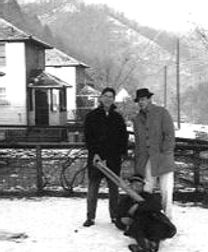
The rocket boys called themselves the Big Creek Missile Agency,
based in Cape Coalwood.

Rocket boys, from left: Homer, Quentin Wilson, Roy Lee Cooke, O'Dell Carroll. Not pictured: Sherman Siers, Billy Rose.
Enter the movie
While Homer raced to write his book, Universal Pictures brought on an A-list Hollywood screenwriter named Lewis Colick to write the screenplay for the movie version of a book that did not yet exist. How did that go? “Not well,” he said.
The Homer who didn't go into the mine in real life and the "Homer" who did in the movie.
“They said, ‘All right, so it's like this, Homer. You’ve got to have a villain in the movie. It's going to be your dad or it's going to be the coal mine. Take your pick! You set up the bad guy, and then, ultimately, the hero's got to meet him. And defeat him.”
So the Coalwood mine was the villain in the movie version, Homer said. “It's like,
okay, I get it. I just want you to know that would not have happened, you know? And it's not going to be in the book!”
_edited.jpg)
“His first script really was awful. It made me sick,” he recalls. “And I thought, ‘I'm going to have to go up to West Virginia and apologize to everybody in the state.’ It's so easy to just use the stereotypes. So, everybody was barefoot and pregnant, if you're a woman, right? We didn't have shoes, and we were all starving to death.
"It's like, ‘Lewis, this is the 1950s, the coalfields of West Virginia. Everybody was employed! Mines were going 100 percent. There were some folks back in the hollers, yeah, that might have been hungry. And I knew them. Like Billy Rose, one of the rocket boys. It happened. But it's not, like, everybody! We're all not out there wearing patched clothes and starving every day. I said I realized that's what Universal wants, but let’s haul it back.”
By the time the screenplay was finished, Homer had finished a draft of the book. The screenplay version has young Homer quitting school to go work in the mine, an unlikely event the adult Homer pointed out to Universal. “I said that would have never happened. My mom would have shot me dead going out the door before she would have ever allowed me to quit school!
From Rocket Boys to October Sky
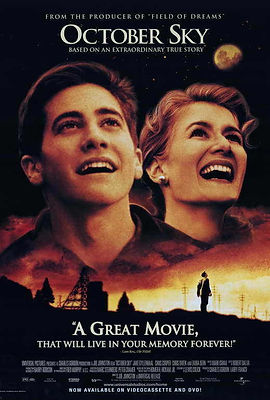
Universal executives worried that the title Rocket Boys would not appeal to a wide enough audience, so they named the movie October Sky and released it in 1999. Homer was against the new title, but after the movie’s success, his book was renamed October Sky.
While Hollywood took liberties filming the book, Rocket Boys is not strict autobiography, either, Homer said. He coined a word t0 describe it: ‘Novoir,’ a book where a memoir meets the novel.
A memoir is different from an autobiography, he observed. “I read To Kill a Mockingbird, which is just a memoir in disguise, right? I'm thinking, so, with memoirs, you're allowed to use composite characters. You're allowed to shift things around. Maybe something that happened after, bring it in earlier and so on. That's why I say it's all true, except there are parts that are not. And they're true, too.”
He explained this at the beginning of Rocket Boys. “The rocket boys were real. The story is real, but I have taken a writer's liberty. My whole reason for doing that, ultimately, is to tell the truth, because then the truth can really come out. The emotion can really come out.”
“I rewrote it dozens of times. The first chapter, especially. I rewrote it. Rewrote it. Rewrote it. Because I realized I was telling a story that people are almost going to have to be convinced that they want to read about. A coal town? In southern West Virginia back in the 1950s? Why would I want to read about that, right?
Harper Lee had the same problem with To Kill a Mockingbird, he said. “Who wants to read about a small town in the 1930s in Alabama? It has got to be well written. The characters have to be interesting.”
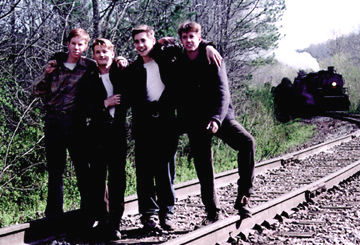
Rocket boys on the loose with a train coming, from the movie October Sky.
He created a character for Rocket Boys named Jake Mosby, for instance. “It’s like a composite of three junior engineers that I know. It’s confusing to have three characters that are almost alike at different parts in the book. So I'm just going to combine them, call that character Jake Mosby and move things around a little bit.”
How could a globetrotting NASA employee fit writing into his life? Homer solved that problem by rising very early to write Rocket Boys. “I was also still working for NASA, then. I was going back and forth to Russia. I would get up at four o'clock in the morning. Start writing. Go to work. Come back. Write.”
How much editing did the Random House imprint Delacorte Books do after they won the rights to publish the book, outbidding Harper Collins for $300,000, a pretty sum at the time?
“Tom Spain was the editor,” he said. “He’s very, very good. He didn't edit me that much. I can think of just one place and thank goodness he did edit me. It's actually a piece of the book I almost always read when I'm going to read from the book. When the boys blow up the fence, I just had ‘BOOM!’ I just put a great big boom, exclamation point. Tom said, ‘I think you can do better than that.’ He made me go back and dissect that scene, and it ended up being a really good scene.”
The book sale earned Homer $300,000, with more to come from the movie. His Hollywood literary agent Mickey Freiburg asked “Homer, what do you hope to get out of this?”
Homer said, “Well, I could use a new microwave.’”
“I think you're going to be able to afford a microwave,” Freiburg responded.
Homer laughed at the memory. “Thank goodness I was 55 years old when this happened, okay? I had a career behind me. I was, like, 10 years away from retirement. All of a sudden, I get this great big slug of money. Well, I still live in the same house I lived in, then. The only thing that I've really done with that money, I ended up buying a home down in the Virgin Islands. I was a scuba instructor. My wife, at that time was a scuba instructor, and we wanted to live in the Caribbean. I still have it. I'm about to sell it. That was being a little bit spendthrift, if you will. I still have all that money. I just invested it. I haven't done anything with it.”
It might have gone differently if all that cash and fame had come his way in his 20s, a far wilder time in his life, he said. “I’d have probably gone a little crazy. But by then, I was a pretty solid citizen there in Huntsville. And everybody in Huntsville that I knew was excited that success had come Homer's way.”
A wave of other books


.jpg)
The Rocket Boys triumph included a Book-of-the-Month Club slot and a near-miss for a National Book Critics Circle Award for best book written that year in English. He has written a total of 18 other books, including three more Coalwood-centered novoirs: The Coalwood Way, Sky of Stone, and We Are Not Afraid.
“I kind of think I was in the top of my game, writing memoirs, at that time,” he said. “But then it was, like, you know, gosh, I want to do something else.”
Right after the Rocket Boys tidal wave, Random House said they wanted another book as soon as he could deliver it. “While you’re hot!” his agent said. Homer already had a finished manuscript in his desk drawer. He rewrote it “stem to stern,” he said.
Called Back to the Moon, it was a Tom Clancy-style techno-thriller that Homer now says shouldn't have been his second book for Random House. “It was totally different from Rocket Boys. It did really, really well, but what Random House wanted me to do was to write another memoir.”
He pitched it to Random House. “And Random House said, 'No, we want more memoirs. You're a memoir writer.' And I went, 'The heck, I am!’ So, Frank and I went out and sold it to St Martin's Thomas Dunne imprint. They took a chance. They took a gamble. It was a trilogy and it did very, very well.”
After he wrote the three other Coalwood books, he wanted to try a rip-roaring, character-driven novel set in the Outer Banks he loved. The Josh Turlow series would hinge on the bloody story of U-2 boats assaulting America in 1942, with plot turns featuring a family tragedy, a complex love affair, and much Atlantic seaboard local color.


.jpg)
That series — The Keeper’s Son, The Ambassador’s Son, and The Far Reaches — centers on the wild adventures of Coast Guard lieutenant Josh Thurlow, whose family has long operated a lighthouse off the Outer Banks. Thurlow is haunted by his younger brother's disappearance at sea decades before. He is still searching for him when – to quote the book’s description at homerhickam.com — “German U-boats arrive to soak the beaches with blood”.
The next two sequels raise the yarn-spinning ante as Thurlow leaps into bloody island-hopping battles in the South Pacific during World War II. The characters include a young PT-boat skipper named John F. Kennedy — who in real life piloted that vessel in that war — plus a devious young Navy man named Richard Milhaus Nixon. The novel delivers “action, exotic surprises, and compelling romance,” as one reviewer put it, not to mention the island cults and cannibals who want to have Thurlow for lunch.
Josh Thurlow devotees want a fourth book, Homer said, “because I left him swimming in the Pacific Ocean.” One woman wrote to ask if another was on the way. “I said, 'Well, I hadn't planned on it.' She said, 'Can I write it as fan-fiction?’ I went, 'Yeah, why not! You write it!’”
He wishes her well, he says. “I think fan fiction is great. It's mostly Star Wars and Star Trek. Producers and writers of those series realized a long time ago fan fiction was just good for them. If somebody wants to fan-fiction Josh Thurlow, who am I to say no?”
Coalwood on the moon?
He wrote another trilogy geared to young adults, set in a mining community on the Moon in the 22nd Century. He says the "Helium 3" books — Crater, Crescent, and Crater True Blood and The Lunar Rescue Company — are a lunar channeling of his hometown. “I just took Coalwood and set it on the moon. And imagined what life would be like in a mining community 200 years later. That worked real well. Sold real well. “
Then came the time in Homer's career when he was picked up by an unexpected publisher. “Frank Weimann sold me to Thomas Nelson, which was a Christian publisher in Nashville. And for enough money that I just could not ignore it.”


.jpg)
This raised a question in his writing career, he said. “Like, okay, how am I going to write for a Christian publisher? I am a Christian, yeah … I believe, okay? But that's not the way I write. But they wanted to go mainstream as much as they could. So that's why they hired me to write them some mainstream books on anything I wanted.”

He hit a bump of disapproval with the draft of a book called The Red Helmet, a tale about Song Hawkins, a gorgeous New York businesswoman who falls in love with Cable Jordan, a West Virginia coal mine manager. In the story — his first try at romance — Song descends into the mine wearing a red helmet that marks her as a rookie miner. Later, she must rescue her husband and lift him to safety.
“So I wrote Cable saying, 'No, I'm too heavy. You can't lift me.' And I wrote [Song saying]: 'Sure I can. You've been on top of me lots of times …’
“Well! My editor was kind of unhappy about that line," he said. "She says, 'We have to take that line out.’ And I wouldn't do it. I stuck to my guns. I said, 'They're married. It's a good line. I'll fight you on this …’ She gave in. It was a good line and I liked it. That's about the only thing slightly risqué in that whole book.”
Homer’s Rocket Boys/October Sky monster success turned him into a brand that publishers relied on for sales. That fact ironically left him free to write about what he wants. He did become a brand, he agrees. “I was one person up to then. I've become another person after that.”
He can also be “a publisher's nightmare,” he said, “because I write in different genres. If you get a Homer Hickam book, you're never quite sure what you're going to get, right? It’s not the best for your career. But I like it.”
Here is how one such book got born. He was on set for some of the filming of October Sky, directed by Joe Johnston, who helmed Jurassic Park 3 and liked to hunt dinosaur bones. Through Johnston, he met Jack Horner, the famed paleontologist. Homer went on digs with Horner to seek dinosaur remnants and “really got interested,” he said. “I'm a West Virginia boy. I can tell the difference between a rock and a bone, right? So I started finding some stuff.”
So he dreamed up a book about dino hunting. Published in 2010, The Dinosaur Hunter is set in Montana’s sprawling ranchlands, populated by government-leery ranchers who cherish being left alone — the sort of folks Hickam has met hunting fossils. Mike Wire, a former L.A. homicide detective, oversees the Square C ranch and pines for its hard-nosed female owner. Blood is spilled at a nearby dinosaur excavation with an historic, profitable find. Mike must find out why.


“It's kind of a thriller, it's kind of murder mystery,” he said. “But it's also kind of an education about how you excavate dinosaurs.”
Mike Wire is a cranky, horny, vegetarian former cop with little patience for environmental do-gooders. The book let him try on a different narrator, he said. “I used a voice totally different from all my other books. You could read that book and even though you read all other 18 of my books, not really recognize me as the author. So, that was kind of fun to do.”
A quarter-century later, Homer is still finding pieces of dinosaurs. In an email exchange weeks after this interview, he wrote: ‘I was just out dino hunting in September. Found a hadrosaur… "
No pigeonholes
He definitely has fun writing, refusing to be pigeon-holed, choosing what he wants to write about. Carrying Albert Home is one of his most popular books. The subtitle is: A somewhat true story of a Man, his Wife, and her Alligator. The core story comes from Hickam family lore, but the novel Homer spins from that lore is a fantasy adventure featuring chatty cameos by John Steinbeck and Ernest Hemingway.
His parents, Elsie Lavender and Homer Hickam Sr., were coalfield
high school classmates who graduated as the Great Depression
began. Homer Sr. wanted to marry Elsie, but she left Coalwood to
work in a diner in Orlando, Florida, where she fell for a dashing
actor named Buddy. That would be Buddy Ebsen, best known as Jed
Clampett in The Beverly Hillbillies.


Elsie ended up back in the coalfields. She married her old classmate and — as one does — Buddy sent an actual alligator as a wedding present. Albert enjoyed his own homemade pond in Coalwood and slept in the Hickhams' bathtub at night. Homer’s father eventually put his foot down: “It’s me or the alligator!” The couple drove Albert back to Florida.
“These were stories my parents told, and I expanded on them, obviously,” Homer said.
Carrying Albert Home is charming, bittersweet and humorous. A rooster comes along too. The book has found an international audience since its 2016 release. Hickam’s website links to a guide for reading groups for a book you can also read in languages ranging from Finnish to Japanese to Portuguese.
Other stories, other books
Homer does not yet have a 20th book in the pipeline, he said, although he likes the sound of such a nice round number. “I’m writing other things. But I bet I’ll get a 20th in there somewhere along the line.”
“Do I want to have another memoir? I don't know if really want to unwrap that onion,” he said.
Currently, he is writing a screenplay for a proposed follow-up to October Sky, called December Sky. He taught himself the craft of the screenplay, to create a film version of The Coalwood Way. He calls the story “an equal, not a sequel” to October Sky. It tracks his family, the town, and Homer wrestling with change, sadness, and trouble at the mine, as a beautiful young outsider arrives at Christmastime.
He has also been watching a lot of Hallmark Christmas movies, he confessed. “I am watching this because, by golly, I'm going to write one.”
He is on the board of Space Camp, a 44-year-old NASA program that introduces young people from around the planet to astronaut training and team-building, while putting them in flight and space mission simulators. In 2025, he was inducted into the Space Camp Hall of Fame, so he knows the program’s culture well. The camp gave him an idea for his Hallmark movie.
“The story will be set at Space Camp: ‘A Space Camp Christmas!’” he says, sharing the title with enthusiasm. Some backers of his idea told him “it almost writes itself,” but he tut-tuts that idea.
“It's harder than it looks. I sat there and watched these movies and dissected them in my head. Fortunately, now you can go and Google it.” There is a Hallmark formula, he said. “You gotta have ‘the almost kiss’ at a certain point. And ‘the final kiss.’ And ‘the miracle that occurs’ and all that.”
In 2025, he launched Homer Hickam Books, his own imprint. He plans to publish a few books yearly. “I still think that there's room for a lot of really wonderful books to come out of Appalachia. I hope I'm able to bring along some writers with my imprint.”
Homer is doing the selecting. He recently turned down a writer who wrote extremely well, except for one very big thing. This is what he told the applicant: “I don't much care about the characters, and I don't much care about what they're doing. Somehow you've got to find that story. And honestly, you may never find it. But you got to keep looking for it.”
His counsel to aspiring writers? Study what makes you, as a reader, turn the page. That's what he did.
“If you're reading something and it makes you want to turn the page, stop and question yourself! What did that author just do that made you want to turn the page? Usually, it’s not what they put in, but what they left out. You’ve got to turn the page to find out what happened, right? And you've got to make the character interesting. Even if it's an evil character or whatever it is, that character has to be interesting, or you're not going to turn the page.”
It’s not an easy thing to do, he conceded, so do some homework, he tells wannabe authors.
“Go read All Over But the Shouting by Rick Bragg. Read that! That's a memoir that takes place in a little farm town in Alabama that nobody should really give a crap about. You read that book and you figure out how Rick Bragg made that interesting. Then, you write your book.”
The publishing industry has changed massively since his breakthrough days, he noted. “Hardly any editor ever comes into their office anymore. They're all out living in Connecticut, Rhode Island or wherever, and basically just doing everything over the computer. You lose that personal touch with the editors. Like, you used to go into Flatiron Building where St Martin's was. Sit in Thomas Dunn's office and look out over New York, like I did for Random House. It was such a thrill … It just doesn't exist anymore, not really. And they don't do book tours anymore. They don't do advances anymore. So, it's harder.”
On the other hand, there are new independent publishers like Headline Books, which is taking on Homer Hickam Books as an imprint, with a focus on memoirs, historical fiction, adventure and history, aerospace, and Appalachian settings, all of which speak to Homer’s own passions.
“So you've got more possibilities of getting published. It kind of depends on the type of book you want to write. A fiction novel is probably the hardest book to sell. Genre novels are better: romances, techno-thrillers, whatever it happens to be. Self-help books, business books, political books. What are you interested in? Where do your talent and skills lead you? Just don't give up. Look for that manuscript. Work it. Go to writers conferences, try to meet editors. These days, it's actually more person-to-person than it used to be.”
The hero business
A while back, Homer met another West Virginia icon, famous World War II flying ace and test pilot Chuck Yeager. “Chuck said, ‘Well, Homer, we're in the hero business. You do realize that?’
“And I go, ‘I get it. ..’ When you're on the road, you're the hero and you've got to play the hero. That means you've got to dig down deep and pull up all the energy you can, because your audience, your fans, are now going to drain it right out of you. It can become a little bit wearying out there. But I need to do it.”
He is always happy to return home to his cats in Alabama. He has given each a creative name. Curly Bill is named for a character in the Tombstone streaming series, and Wyatt echoes the way Alabamians pronounce the cat’s color, as in: ‘He’s a why-at cat.’ And Hubble … Well, Hickam was part of the NASA team that fixed that satellite.
“I can't keep Hubble all out of my lap,” he adds. “He was living under a bridge. I’m a foster failure. I was just fostering him, and now he's never going anywhere.”
His most famous cat. who was with him 18 years, was named Paco. Paco was a popular character among the NASA staff who took care of him when Homer went to work in Japan or Russia. Homer wrote a book about him named Paco, the Cat Who Meowed in Space. To get the astronauts through tense minutes, the staff recorded Paco meowing. It made the astronauts laugh and relax, to hear Paco in space. A scholarship to the Space Camp in Huntsville is named for Paco.

Paco
Homer plans to keep on telling stories. He doesn’t think he can help it. And he plans to keep on writing about what he wants to write about.
He had a cancer diagnosis last year and finished chemotherapy in April 2025. He says he is doing much better now. He volunteers on Fridays at the Clearview Cancer Institute in Huntsville. “That’s been really good for me, to meet these people and help them in any way I can.”
He smiled when he recalled the moment when his oncologist told him he had cancer, that he was near to dying and needed immediate treatment. Why smile? Soon as his doctor told him, Homer said, "My thought was, ‘I can write about this!"
He has come a long, adventurous way since he wrote his first story in third grade. “I'm still a Coalwood boy,” he said. "Anything that I do, it's almost like my parents are watching me, and the people of Coalwood are watching me. I know they'd be very proud that I was able to do what I have done. I always want to make them proud of me.”

For his writing, Homer Hickam was awarded the University of Alabama's Clarence Cason Award and the Appalachian Heritage Writer's Award from the West Virginia Humanities Council, plus an honorary Doctorate of Literature from Marshall University. For more information on Homer, his books and cats and everything else, go to http://www.homerhickam.com.

Douglas John Imbrogno is a lifelong storyteller, essayist, documentarian, musician, poet and herder of cats, whose prose, essays, videos, and poetry have been published widely. See his recent work and Substack multimedia site at linktr.ee/douglaseeye , including a link to the YouTube channel of his folk-chamber ensemble THROUGH the TREES and documentaries 'HOUSE IN THE CLOUDS' and 'COMING HOME.' He is at work on the novelized memoir 'CRAZY DAYS: Confessions of a Fallen Altar Boy.'