
five more voices
generations of West Virginia creative writing
~ five writers, each issue ~
A sister site to Voices of West Virginia : Issue # 4
FREE!
You're invited
to feel proud!
FAQ
questions,
click the About
tab



Julia Keller
Pulitzer Prize-winning journalist quit her newspaper job to write detective novels, as a way of fighting the WV drug epidemic.
At age 9, Julia Keller announced she was starting her own detective agency. It never happened. Instead, she grew up, graduated from Marshall, left her Huntington home, got a Fellowship to Harvard and a Ph.D in English literature. She wrote stories for the Chicago Tribune for 23 years, then in 2005, won a Pulitzer Prize for feature writing.
Then in 2012, she found a way to be an almost-detective. She quit newspapering and started writing a nationally-acclaimed mystery series, set in rural West Virginia, starring Belfa Elkins, ace woman prosecutor turned detective.
There are eight books and three novellas in the Bell Elkins series, so far. She deals with opioids, murders, senior citizen disappearances, prostitutes, pregnant teenagers.
National reviewers love that series.
-
“As fine a piece of writing as you will read this year” - The Associated Press.
-
"The novel moves quickly, but with the graceful character development and lyrical descriptions of rural and small-town West Virginia that readers have come to expect and appreciate from Keller ..."
- The Columbus Dispatch
-
“Bell Elkins is one of the most fully realized character in fiction today.”
- Michael Connelly
Bell Elkins is a hard-core West Virginia woman who knows everybody in the fictional town of Ackers Gap, West Virginia. She has a shocking past and is unrelentingly devoted to her home ground, which Julia Keller describes as a "beautiful, beleaguered patch of West Virginia."
A brilliant lawyer, Bell Elkins could have had a profitable, high-profile career in Washington, but she left her husband and job and came back home. As a National Public Radio review said, “Elkins returned to West Virginia determined and fierce. She makes mistakes, but she also solves cases. She keeps a 12-gauge shotgun underneath her bed.”
"And I love that about her," Julia said. Julia talks about Bell as if she didn't create her.
Keller told National Public Radio that she didn’t have to work hard to create Bell Elkin’s world. "I know what the streets look like. I know what the courthouse looks like. It is in some ways more real than the world that I see."
Bell Elkins routinely deals with drug dealers, murders, senior citizen disappearances, pregnant teenagers. Everyone wonders why she came back, when she could have been making big bucks in D.C.
Why did Julia Keller decide to
write this series?
Julia won her 2005 Pulitzer for stories about people rebuilding their lives in a small Indiana town after a tornado clobbered them. Reporting those stories stirred up her deep attachment to small towns, where people help each other, she said. /4
Soon after she got the Pulitzer, she was sitting at her desk in Chicago, reading newspapers online, when she came across a Los Angeles Times story about West Virginia, called “Black tar moves in, and death follows,” It was part of a series called “The Heroin Road,” set in her West Virginia hometown, Huntington.
The story was “a gut punch,” she said. She remembered Huntington as “the kind of place where my friends and I would ride our bikes on unpaved roads long after dark and catch crawdads in the creek that threaded through the woods.”
She was overcome by a strong urge to DO something. she said. She scoured the Internet, reading every story about opioids and heroin in West Virginia she could find. “I entertained do-gooder fantasies about moving back to Huntington. I’d run for mayor. I’d raise funds for rehab facilities. I’d persuade Oprah Winfrey to do a show from Ritter Park, the town’s crown jewel, to lift our spirits.
“I quickly realized, however, the arrogance and impracticality of my high-minded scheme. I’m not a politician or an addiction counselor. And I don’t have Oprah’s cell number.” But she is a writer. “Maybe there was something I could do, after all," she told Criminal Element online magazine.
In 2012, she left Chicago and took a teaching job at Ohio State in Athens, Ohio, a half hour drive from the West Virginia line. That same year, she published the first of her Bell Elkins mysteries. She’d decided that maybe that was what she could do to help.
I’m a novelist,” Keller wrote in her introduction to the first Bell Elkins novel, “While many, many words have gone toward describing and quantifying the Appalachian virus—drug addiction—most of those words have been nonfiction. And fiction has a special role to play in times of urgent social, moral, and political reckoning.”
She was serious. “I had begun to ask myself with increasing urgency: Does writing about something ever make a difference? She thought about Uncle Tom’s Cabin, The Grapes of Wrath and other novels that helped readers see a widespread problem through the story of a few people.
“I still cannot quite believe what has happened to my hometown. Huntington is filled, for the most part, with decent, hardworking, and now heartbroken people, people who look around and wonder how we got here.”

“While many, many words have gone toward describing and quantifying the Appalachian virus—drug addiction—most of those words have been nonfiction. And fiction has a special role to play in times of urgent social, moral, and political reckoning.”
- Julia Keller
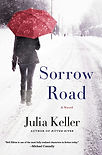
“And so I have continued to add novels to my series: After A Killing in the Hills, there are Bitter River, Summer of the Dead, Last Ragged Breath, Sorrow Road, Fast Falls the Night…," she told The National Review. "They are mysteries, and I hope they are entertaining, but I also hope they provide some small insight into the greatest mystery of all: other people."
“With each book,” she told the National Book Review, “I explore a different aspect of life in a small, broken town in a forgotten state, and I do have to make an effort to let people grow and change – and not always in positive ways. I always wanted to write a series – because I love them as a reader – but I had not anticipated the daunting creative challenge of letting characters do as they will, regardless of my idea of what they should be doing.”
Julia knows how to bring a small town to life, with its neighbors, truck stops and diners. Bell and her compadres often meet at Ike's Diner to plot case strategy and eat pie. In the first scene of the first book of the series, a guy comes in the Salty Dawg, another diner, and shoots three old men sitting at a table.
Julia drove to West Virginia often as she wrote her books. “Instead of talking mostly to public officials or addicts themselves, I wanted to check in with mothers and fathers and grandmothers and grandfathers. I wanted to speak with sisters and brothers and uncles and cousins… people for whom this crisis is a part of their daily reality.”/2
She wanted to make Ackers Gap realistic. The reader comes away with a sense of what small town police/detective work is like in a struggling town, where most people know each other. Bell Elkins routinely deals with drug-laced situations, but there are no frequent car chases, no murder every ten pages.
Julia says she may never know if her Bell Elkins books had the impact she wanted “…because the good that literature does is a subtle kind of good. A subterranean kind of good. There’s nothing evidence-based about this kind of good. It’s not tangible or definitive. … Literature’s unique role is to demonstrate that we’re not limited to the stubborn ugliness of only one kind of reality. …”
She describes Bell as "a character who, despite being damaged by her own violent childhood, returned to West Virginia ready to do battle.”
Bell had her reasons for coming home and staying there. Her world in Acker’s Gap includes her daughter, her lover, her work, lifelong connections, stunningly beautiful surroundings. And there are problems she can use her brains and skills to help solve or at least try to. She and Julia Keller.

Beyond Bell Elkins
Julia Keller is more than a mystery writer.

powerful way to take control of your life."
She delivered a TED Talk on the subject: "How to get ahead by giving up."
And here's an in-depth look at Quitting from England's The Guardian.
~~~~~~~~~~~~~~~~~~~~~~~~~~~~~~~
This is a fascinating study of the invention of the machine gun and other inventions that dramatically changed life in the early 1900s.
Here's an excellent interview with Julia on this subject.
~~~~~~~~~~~~~~~~~~~~~~~~~~~
~~~~~~~~~~~~~~~~~~~~~~~~~~

Her critically acclaimed 2023 book, Quitting, is subtitled The Myth of Perserverance and How the New Science of Giving Up Can Set You Free. In this book, she lays out a compelling argument for the idea that "quitting can actually be a
in 2008, she published Mr. Gatling's Terrible Marvel. The subtitle is The Gun that changed Everything and the Misunderstood Genius who Invented it.

Julia Keller also wrote a five-book, young-adult, sci-fi series called The Dark Intercept. This series centers on Violet, a young woman living on New Earth, a second planet home for earthlings. New Earth is
threatened. Violet is racing to stop the destruction.

Her young adult book, Back Home (2009) tells a moving young-adult story about a teenage girl whose veteran dad who comes home from war a very different person.
“This is introspective, literary crime fiction at its best … Keller’s Bell Elkins series sets a standard for its evocation of place and for the sensitive portrayals of its characters."
– Michele Leber, Booklist
Sample from the Bell Elkins mysteries
from A Killing in the Hills (2012)
Prosecutor Bell Elkins and the sheriff have been burning the midnight oil after somebody walked into the local diner and shot three people dead. Bell is driving home late to her teenage daughter, Carla.
Bell pulled into her driveway and shut down the engine. She’d driven through a dark town to get here. Night fell blunt and heavy in the mountains, like something shot cleanly out of the sky that drops to earth with a whisper.
The big stone house with the wraparound porch reared up on her right, massive,
imperturbable. Peppy yellow light filled the first-floor windows. No lights burned in any other house on the block. People in Acker’s Gap went to bed early and got up early; you’d find more lights on at 4:30 A.M. than you would at 9:30 P.M.
She opened the door of her Ford Explorer and felt a mean pinch of cold. If it was already this chilly in November, a hard winter was waiting for them. Hard and long.
Standing on the blacktopped driveway. Bell reached back into the vehicle, scooping up her briefcase in one hand and her empty coffee mug in the other. She shut the door with a cocked knee.
In the distance, a dog yodeled his protest. He’s probably smelled a coon, and now
strained painfully against a stake-out chain. Each elongated bark ended in a series of high-pitched yips. The yips bounced and echoed. Hitting the cold air one by one with a ping! like a strike by a tiny bright hammer.
And then the sounds abruptly stopped, which meant the dog had either given up on the coon or was just taking a short break.
Bell hoped it was the latter. She didn’t like the idea of anybody giving up on a chase
these days, no matter what the odds.
It was later than she wanted it to be. Much later. She’d planned to get home to Carla a
long time before now, but as the meeting with the sheriff had gone on and on, she’d resigned herself to the necessity of being painstakingly thorough. To getting a jump on the case. To doing things right. She’d explain it all to Carla. And Carla would understand. Of course she would. Wouldn’t she?
Bell paused a moment at the bottom of the porch steps, looking not at the house but
above it, beyond it, back up at the mountain, as if it had, just now, softly called her name.
It knew her name very well.
It knew because the past was always present here, no matter what time your wristwatch
tried to tell you it was. Time was like a mountain road that wound around and around and around, switching back, twisting in a series of confusing loops, so that you were never quite sure if you were in forward or reverse, going up or going down, heading into tomorrow or falling
back into yesterday, or if, in the end, it really made all that much difference.
Before she’d left the courthouse, she and Fogelsong had gone over the preliminary
forensics and ballistics report from Charleston, which had finally come stuttering out of the fax machine. They’d fielded a call from Floyd Fontaine over at Fontaine’s Funeral Home about the
timetable for releasing the bodies, referring him to the county coroner’s office. They’d conferred with Nick’s deputies about the discouraging lack of progress in the manhunt.
After that, there’d been a brief conference call with the regional vice-president of the Salty Dawg chain down in Charlotte. The company wanted to establish three college scholarships for students at Acker’s Gap High School to commemorate the victims.
And then, because she and the sheriff were already so tired and heartsick and bewildered that they figured they might as well push on through, might as well bring all the bad news right out into the open, they had talked again about the theory—based on rumors, based on recent
patterns of arrest and statistical data they were getting from the state police—that a lot of the prescription drug abuse in West Virginia was being coordinated out of just a handful of places.
One of those places was Raythune County.
The thought repulsed Bell, and it angered her, but the facts were persuasive. Prescription medications were showing up everywhere, but if you stood before a state map and used your finger to trace a path toward the center of one set of concentric rings, it would end up in the vicinity of Aker’s Gap.
By the time she had risen from the straight-backed chair facing the sheriff’s desk and
said, “That’s it for me, Nick,” fatigue was making her left eyelid twitch.
She’d rubbed it as she had driven home, using her knuckle to dig deep, which put her left eye temporarily out of commission. But when you knew these streets as well as Bell did, you could easily drive them one-eyed.
Hell. She could probably drive them blindfolded.

Writer Kate Long grew up in Fayette County. She is the editor of Five More Voices and Voices of West Virginia.
Footnotes: Julia's quotations in this story were part of
the following publications. Click the link to read the article.